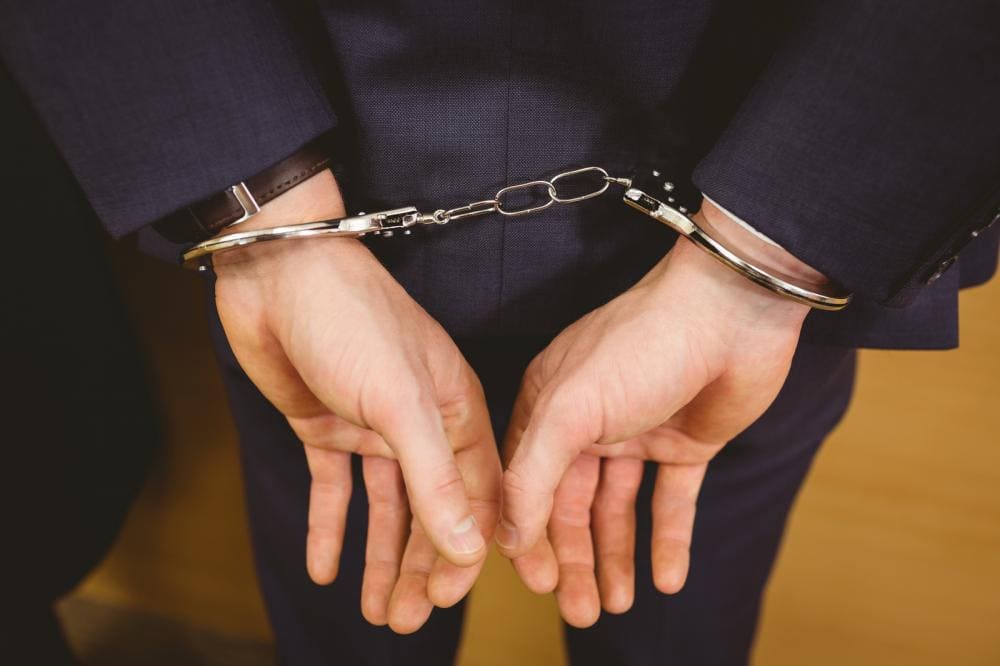
Seemingly Innocent but Leads to Much Crime

Seemingly Innocent but Leads to Much Crime
At the root of the Prescription Drug Abuse epidemic is the reckless prescription of the drugs themselves.
A couple of shocking statistics that we have shared here but bear repeating:
It’s no wonder that practices like the above have led to rampant prescription drug abuse in the United States.
In order for changes to happen, policies must be changed. Awareness must be raised. That is why StopOxy is here doing what we do.
Two of the biggest cases of prescription drug diversion in California weren’t broken open by detective work alone. Dr. Lisa Barden, an obstetrician from the Coachella Valley, stole patients’ identities to fuel her own prescription drug addiction. Dr. Nazar Al Bussam, was the top provider of illegal prescription drugs in Southern California for three years. Both doctors were arrested after being flagged by California’s prescription drug monitoring system.
California’s system, known as the Controlled Substance Utilization Review and Evaluation System (CURES), is the oldest drug monitoring program in the nation. Read more about CURES at the State of California Department of Justice Website. At a time when prescription drug abuse is at an all-time high, California Governor Jerry Brown is threatening to shut down the system in response to budget cuts. According to authorities, future investigations into unethical doctors and illegal prescriptions would be seriously impacted if the system was no longer updated with prescription information from pharmacies.
Three years ago, the CURES database was moved online and made available to doctors and law enforcement officials in California. The database currently contains information related to 100 million prescriptions. Since 2009, more than 8,000 healthcare providers and pharmacists have registered to use the system and have accessed more than 1 million patient reports.
Establishment of prescription drug monitoring programs (abbreviated as PDMP) in every state is one of the goals of the Obama Administration’s 2011 Prescription Drug Abuse Prevention Plan. Across the nation, 37 states have drug monitoring systems in place. The remaining states are in the process of legislating or setting up systems. Only California is considering shutting down an existing prescription drug database system.
California Governor Jerry Brown was a supporter of CURES during the years that he served as the state’s Attorney General. During his tenure high-profile investigations were launched into the prescription drug deaths of celebrities Michael Jackson, Anna Nicole Smith and Corey Haim. Faced with a fiscal crisis in California, Brown signed a budget last summer that eliminated funding for the department that maintains CURES. Support staff has already been cut from eight people to two.
State officials will make a decision within the next few weeks on whether to terminate all funding for CURES.
There is a new initiative to try and provide easier alternatives for people to dispose of prescription drugs.
Let alone, the issues of addiction and overdose, pharmaceutical drugs are harmful to the environment if they are not properly disposed of.
Pictured are a couple of the “drop boxes” that will be used in New Jersey…
What do you think the potential is an ambitious drug seeker will try to get into one of these? We know from the article that at least one of them is going to be inside the lobby of a police station… which should greatly reduce that likelihood.
The pill mills of Florida have generally been the primary focus of a of media attention. However, we’ve seen some big OxyContin related busts in the southland of California as well:
Smuggling Ring Took Pills Into Mexico
Newport Coast Doctor Gets 230 Year Sentence
Rowland Hights Dr. Tseng – Doctor of Death Sued by Family of Overdose Victim
This week Los Angeles has some news on the Oxy Crackdown because four medical clinics that were suspected of illegally dispensing prescriptions were raided.
Investigators determined that the San Fernando Valley clinics have been operating as pill mills, catering to addicts seeking narcotic painkillers and other prescription drugs. The raids were carried out by local, state and federal investigators from the LAPD, Los Angeles County Sheriff’s Department, the California Department of Justice, the IRS and the FBI.
The investigation was prompted by several recent overdoses in the area, including the overdose death of a 51-year-old man who had obtained prescriptions for several different medications from one of the clinics. Pharmacy bottles from the clinics have been found in the possession of drug suspects arrested in Washington, Arizona and several other states. Additionally, pharmacists from California, Oregon, Washington, Nevada, Utah and Arizona have registered complaints about the high number of prescriptions they have been seeing from the clinics.
Investigators searched the home of the manager of two of the clinics and confiscated $300,000 in cash and 300,000 OxyContin pills. The manager, identified as Anush Davtyan, is suspected of planning to sell the medication on the black market for $30 to $80 per pill. Sheriff’s Department Sgt. Steve Opferman reports that most of the criminal activity that the clinics are accused of involved OxyContin.
According to investigators, no physical exams took place at the clinics. Addicts were charged several hundred dollars for prescriptions for OxyContin as well as codeine and promethazine (a prescription cough syrup). A former clinic customer told investigators that clinic doctors would spend about two minutes with each client. A urine test would be performed but no blood tests. Doctors would then write prescriptions for whatever drugs the client requested.
In addition to writing illegal prescriptions, the clinics are accused of several types of fraud. Some of the illegal prescriptions that were dispensed by the clinics used stolen Medicare information. Medicare was also billed for treatments that were never performed. The signatures of two doctors who once worked for the clinics but have since died were found on many of the prescriptions. In addition, the clinics are also suspected of committing identity theft involving people who had obtained prescriptions.
Beware to those who profit off of the unethical promotion of prescription drugs like OxyContin, Percocet, Fentanyl, or Vicodin. Your drugs have caused way to much heartache, overdose, and loss. Your drugs have ignited a heroin epidemic (when desperate users can no longer afford the expensive medications).
You are now facing more scrutiny as concerned citizens organize and start spreading awareness through websites like S.T.A.M.P. (Stop the Abuse of Medical Prescriptions).
S.T.A.M.P was started by residents affected by prescription drug abuse along the “OxyContin Express” (see documentary video here). These concerned residents are not staying silent about this phenomenon that is destroying families along the highway from Greenup County to Broward County.
This great website
This is what change looks like. This is the type of activity that will make a difference. Please visit The S.T.A.M.P. Website and get involved.
In today’s changing climate of addiction, where prescription drug abuse has surpassed illegal drug abuse, the drug dealers are often members of the medical profession. This again became evident this week in a Los Angeles federal courtroom when Dr. Nazar Al Bussum pled guilty to drug distribution charges. The 72-year-old geriatric physician, who lives in the exclusive community of Newport Coast but operated clinics in Downy and Los Angeles, could be sentenced to as many as 230 years in prison and fined up to $11.5 million.
Al Bussum is charged with writing prescriptions for narcotic painkillers, codeine cough syrup and anti-anxiety medication for patients who had no medical need for the drugs. The majority of the prescriptions were for oxycodone, hydrocodone and Xanax – all highly addictive substances. Federal prosecutors estimate that he wrote more than 60,000 prescriptions between 2007 and 2010, making as much as $1 million per year by prescribing drugs that often ended up being sold on the street.
Federal investigators targeted Al Bussum after his name showed up as one of the top 10 prescribers of controlled prescription drugs in the Los Angeles area. During the investigation, some of the drugs prescribed by Al Bussum were tracked to street-level drug dealers in California and Texas.
According to the Drug Enforcement Agency, Al Bussum wrote prescriptions for cash-paying customers including undercover DEA agents. Agents reported that the only question he asked patients was “what drug do you want?” He wrote prescriptions without doing a medical exam or ascertaining that the patient had a legitimate medical problem. One undercover agent even told Al Bussum that he was using oxycodone for recreational purposes and still was given a prescription for the drug.
In a prepared statement, U.S. Attorney Andre Birotte Jr. charged Al Bussum with abusing his position in the medical profession to line his pockets. He violated his oath as a doctor to ‘do no harm’ and contributed to the problem of prescription drug abuse.
As part of a plea agreement, Al Bussum pled guilty to an 18-count indictment. He also agreed to forfeit $450,000 in cash that was found in a search of his home at the time of his arrest. He is barred from practicing medicine or writing prescriptions before his sentencing, which is expected to take place in October. According to the Orange County Register, Al Bussum’s guilty plea is most likely part of a legal strategy aimed at getting his case into appeal. His attorney, Benjamin Gluck, will attempt to introduce evidence that the doctor wrote prescriptions to treat drug addiction. Al Bussum is currently free on bond.
Google, the internationally-known search engine and online advertising company, is being investigated by federal regulators for displaying ads for illegal pharmacies that sell prescription drugs online. These illegal pharmacies sell legitimate prescription drugs without a prescription as well as counterfeit drugs. Now a recent Securities and Exchange System filing by Google indicates that the company is setting aside $500 million in the event that they are fined for their drug advertising practices. This sum represents 22% of the company’s net income of $2.3 billion.
If Google is fined $500 million or more, it could the largest penalty of its type ever paid to the U.S. Department of Justice. This reflects the enormity of the problem of online prescription drug sales. A study by doctors at the University of California and Massachusetts General Hospital found a link between the increase in prescription drug abuse between 2000 and 2007 and the increase in the number of homes with high-speed Internet access. States with the most expansion in high-speed access had the greatest increases in emergency room admissions for prescription drug abuse.
According to Dr. Anupam Jena, one of the study’s co-authors, the prescription drugs that are most frequently purchased illegally online included narcotic painkillers like OxyContin and Percocet, ADHD medication like Ritalin, and anti-anxiety drugs like Ativan and Ambien.
Prior to the investigation, Google reported that it was trying to restrict ads from rogue pharmacies by only accepting ads from pharmacies that are certified by the U.S. National Association Boards of Pharmacy or by the Canadian International Pharmacy Association. Drug abuse experts and law enforcement officials doubt the success of Google’s efforts in this area. The Wall Street Journal reports that Google and other online advertisers have recently earned about $1 billion per year from both online pharmacies. The WSJ also reported that about 96% of online pharmacies appear to be violating pharmacy standards or laws. For example, many illegal pharmacies that appear to be in Canada actually ship drugs from China, India and other offshore locations.
How to rogue pharmacies stay in business? According to Joseph Califano, Jr., founder of Columbia University’s National Center on Addiction and Substance abuse, “It’s very hard to police these sites because they change every couple of days.” The sites are only able to stay in business because of ads displayed through online advertising services like Google AdWords. Califano warned Google about the problem in a 2008 letter, saying that he had found ads for rogue pharmacies displayed when he performed Internet searches for certain drugs. Google never responded to Califano’s letter.
One of Califano’s main concerns is that teenagers and children can obtain dangerous drugs through illegal online pharmacies. Califano believes that it is criminal that Google has profited from the sale of illegal drugs – “… it’s an example of putting profits over people. That’s what we’re talking about here. And it’s bad, really bad, because we’re talking about kids.”
The son of Tennessee Democratic Party chairman Chip Forrester was found dead in his Phi Gamma Delta house last month. Wilson Forrester, 19, was a promising student at the University of Arizona in Tucson Arizona, which was ranked the fifth “hardest-partying” college in 2009 by Playboy.
On April 2, 2011 Forrester was having drinks at Fiji’s fraternity house when friends had to call paramedics after Forrester’s body collapsed. Forrester was pronounced dead at around 9 a.m. When Tucson news KGUN tried to talk to his Phi Gamma Delta, or Fiji, fraternity brothers they refused to comment. Only one comment was made “We’re getting over it and whatever you guys can find by yourselves, that’s pretty much it.”
On April 3, 2011 an autopsy was performed by Dr. Parks with the Pima County Medical Examiners office. Dr. Bruce’s report revealed that Forrester had 31 pieces of evidence of recent injury on his body, but no list in the manner or cause of the injuries.
Forrester’s toxicology repot showed that he had Xanax an anti-anxiety drug, Oxycodone and Oxymorphone which are painkillers; and alcohol in his blood and urine. The cause of death was overdose of alcohol and sedatives.
A spokesperson for the Arizona Poison and Drug Information Center said that mixing alcohol and sedatives can make an individual too sleepy to realize they are ill. In Forrester the amount of each individual dose was not high enough to kill him, but combined they became fatal.
Forrester’s father, Chip Forrester said, “College students today are woefully unaware and ignorant that combining these substances can be fatal…There is little to no education being done on college campuses and at fraternities about this danger.”
University of Arizona police officer Jose Bermudez told Tucson’s KGUN news that the case was still active and a spokesperson would be in contact with the news group. In 2010 KGUN rated Fiji as a “Chapter of Promise.”
The University of Arizona rates their fraternities and sororities on a scale from “Chapters of excellence” to chapters that have lost privileges. Johanne Jensen who is the assistant dean who oversees fraternities told KGUN, that a chapter’s alcohol education efforts can affect its ratings.
Phi Gamma Delta has 138 chapters at campuses across the United States and Canada. Since Fiji was founded in 1848, there have been more than 166,000 men that have been initiated into the fraternity.
Forrester had a promising future coming from a prominent political family. Forrester proudly displayed his photo with former president Bill Clinton on his Facebook page. A memorial service was held for Forrester at his high school in Nashville, where former vice-president Al Gore was attendant.
Forrester’s father said, “Our family is deeply grateful for the outpouring of support during this trying time. Your thoughts and prayers give us strength.” According to family Forrester “had an absolute passion for life and he adventured through each day with a sense of purpose and an open mind.”
Purdue Pharma is looking for six year-old kids to take OxyContin
Makers of OxyContin Purdue Pharma are currently recruiting participants for a clinical study in the treatment of moderate and severe pain.
This are the eligibility standards that Purdue Pharma submitted on March of 2011:
Ages Eligible for Study: 6 Years to 16 Years
Genders Eligible for Study: Both
Accepts Healthy Volunteers: No
Criteria
Inclusion Criteria include:
• Male and female patients aged 6 to 16 years, inclusive, who are expected to require ongoing around-the-clock opioid treatment equivalent to at least 20-mg daily dose of oxycodone for at least 2 weeks for management of moderate to severe (based on the investigator’s judgment) malignant or nonmalignant pain.
• Patients must be opioid tolerant, ie, have been treated with opioids for at least the 5 consecutive days prior to dosing and with at least 20 mg daily of oxycodone or the equivalent during at least the last 48 hours prior to the start of study drug dosing and have tolerated the therapy, as demonstrated at the start of study drug dosing.
• Patients who are currently using transdermal fentanyl should have been on the patch for at least 3 days before removing the patch and oxycodone hydrochloride (HCl) controlled-release (CR) treatment can only be initiated at least 18 hours following the removal of the transdermal fentanyl patch.
• Patients must not require more than a 240-mg total daily dose of oxycodone HCl CR tablets.
• Patients must be willing and able to swallow the oxycodone HCl CR tablets whole.
• Patients must not be currently on an investigational medication/therapy at the start of screening or during the study.
Exclusion Criteria include:
• Female patients who are pregnant or lactating.
• Patients who are allergic to oxycodone or have a history of allergies to other opioids (this criterion does not include patients who have experienced common opioid side effects [eg, nausea, constipation]).
• Patients who have received epidural opioids < 2 hours prior to the first dose of study drug or who have received epidural morphine < 12 hours prior to the first dose of study drug.
• Patients who are contraindicated for the use of opioids.
• Patients who are contraindicated for blood sampling.
• Patients who are currently being maintained on methadone for pain.
• Patients who have any planned surgery during the course of the study, with the exception of the placement of central or peripheral venous access devices.
• Patients who have had surgery within 120 hours prior to Day 1 (day of first dose of study drug).
The current hospitals that are helping conduct the study are; Loma Linda University Medical Center, LS Packard Children’s Hospital, and Bayview Research Group LLC.
The other states that are participating are Arizona, Colorado, Pennsylvania, and Texas.
The study started on November of 2010 and hopes to complete the study by September of 2011.
Purdue Pharma is estimated to have 135 participates by the end of the study.
OxyContin has already been proven to be extremely dangerous and addictive.
In 2007 Purdue Pharma pleaded guilty to criminally marketing OxyContin for saying that the pharmaceutical drug was less likely to be addictive or abused. The private pharmaceutical company was sentenced and fined.
- Cesar V.
Get the latest updates delivered via email